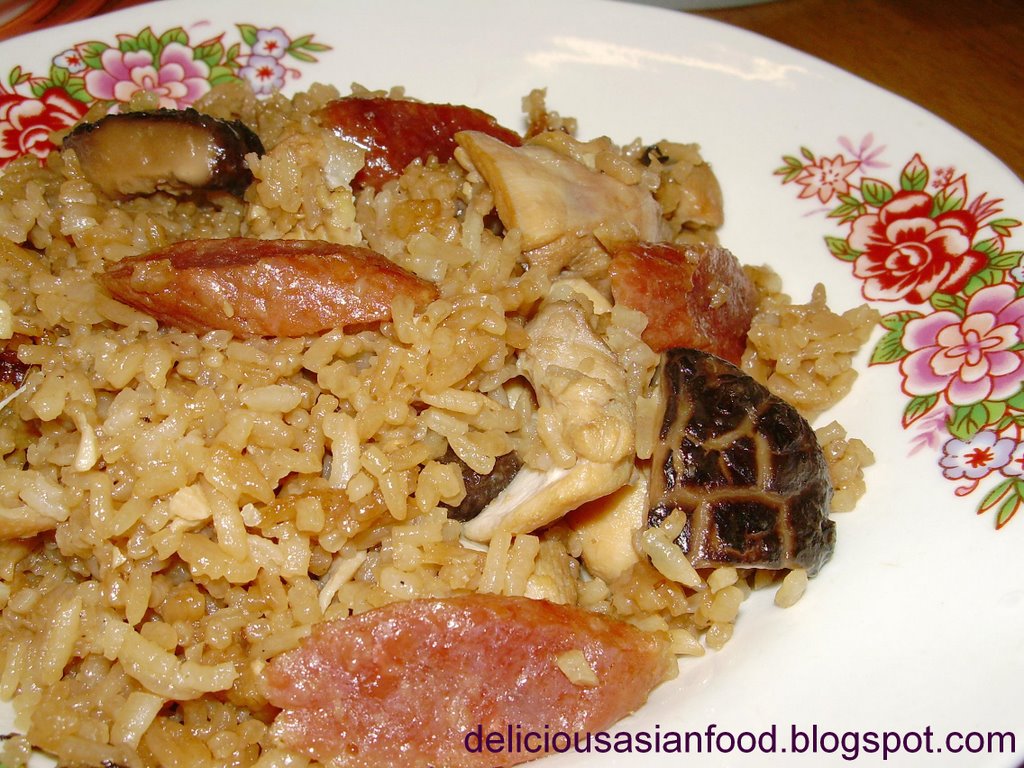
Chicken Rice cooked using Rice Cooker

Chicken, Chinese, Dinner, Lunch, Rice September 29th, 2006

Chicken Rice cooked using Rice Cooker

The rice cooker is a very useful kitchen equipment and is present in many Asian households. Whilst it is primarily designed to cook rice, newer versions of the rice cooker has enable cooks to use it for steaming and even boiling soup.

Recently, my mum cooked Chicken Rice using the rice cooker. It is actually another version of the popular Claypot Chicken Rice. The beauty of using the rice cooker is that the rice does not get burnt at the bottom unlike the claypot. However, for those who are fond of burnt bits of rice, you may have to try this using the claypot instead.

This is the recipe for Chicken Rice using the Rice Cooker.

Ingredients

  • 3 cups of rice (measure using the cup that comes supplied together with the rice cooker)
  • 2 large chicken drumsticks and chicken thighs (chopped to bit sizes)
  • 5 chinese dried mushrooms (pre-soaked in a bowl of water and cut to half or quarters. Do not throw away the water used for soaking)
  • 2 chinese lap cheongs (chinese sausages) (sliced)
  • 4 bulbs shallots (sliced thinly)
  • 5 slices of ginger (more if you like a stronger ginger taste)
  • 2 tablespoons of cooking oil
  • warm water

Marinade for chicken

  • 3 tablespoons oyster sauce
  • 2 teaspoon of white pepper powder
  • 1 teaspoon of sesame oil
  • 1 tablespoon of chinese cooking wine

Seasoning

  • 5 teaspoons of light soya sauce
  • 1 tablespoon of dark soya sauce

Method

Soak rice in water for about 1 1/2 hours. Marinade chicken for the same length of time.

Heat oil in wok and fry shallots till golden brown. Remove fried shallots.

With remaining oil in wok and at high heat, add pre-soaked chinese dried mushrooms and ginger and stir fry for about 1 minute. Add marinated chicken and stir fry for another minute.

Add pre-soaked rice and seasoning and continue frying for about 2 minutes. Sprinkle a little bit of warm water to keep the rice from drying out.

Remove rice with ingredients into the rice cooker. Place the lap cheongs over the rice. Pour water (previously used to soak dried chinese mushrooms) gently over the rice to cover the rice just like how you would usually cook white rice in a rice cooker. Add plain water if the water used to soak dried chinese mushrooms is insufficient. Turn on your rice cooker and let it cook.

Serve hot and sprinkle fried shallots over the rice prior to serving.

Note : As you learn to cook this dish, adjust the seasoning to your prefered taste. You can also sprinkle chopped spring onions over the Chicken Rice for added colour and taste.

Char Siew Fried Rice

Pork, Rice September 26th, 2006

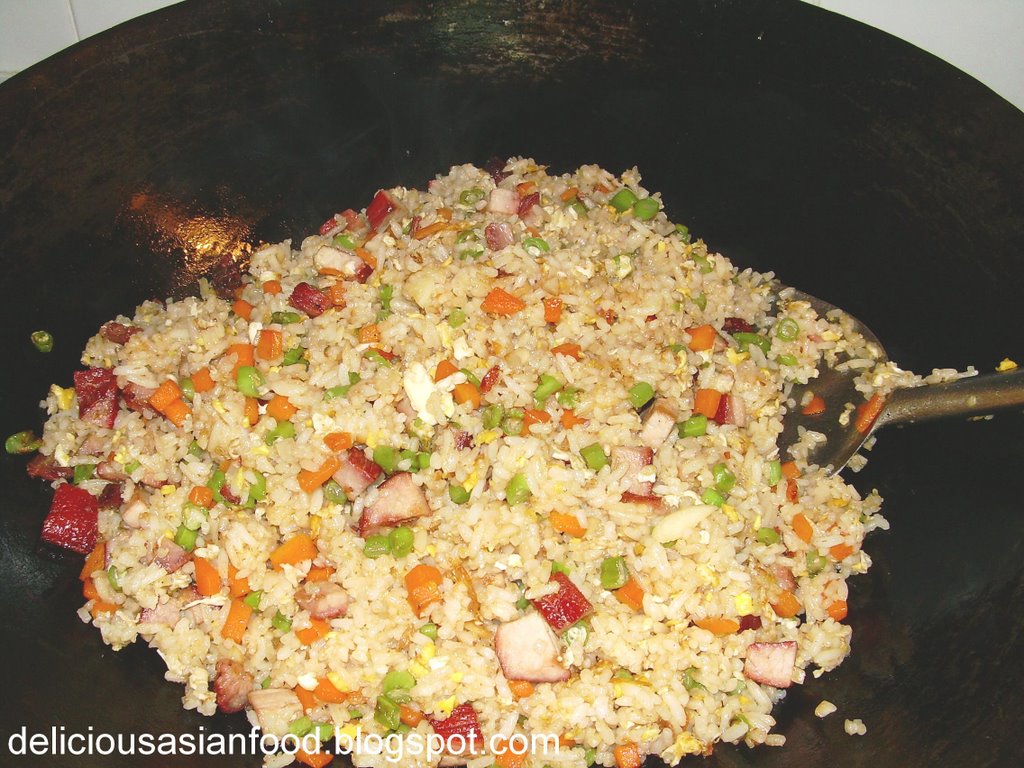
Char Siew Fried Rice

There are many variants of fried rice. In fact, it is only limited by the chef’s imagination. One of the most popular is Egg Fried Rice, a recipe which I previously shared in this site. Another way of frying rice is to add meat to it and this gives the fried rice a good dose of flavour.

Sometimes, I will buy char siew (barbecued pork) from the market and use it as an ingredient in my fried rice. Most of the “tai chaus” (restaurants) also fry their rice this way though I must qualify myself and say that my recipe is more home-style and perhaps, different in some ways. Whilst the list of ingredients may seem long, it is actually not too complicated a recipe if you actually put your hand to it and try it for yourself.

This is my recipe for Char Siew Fried Rice.

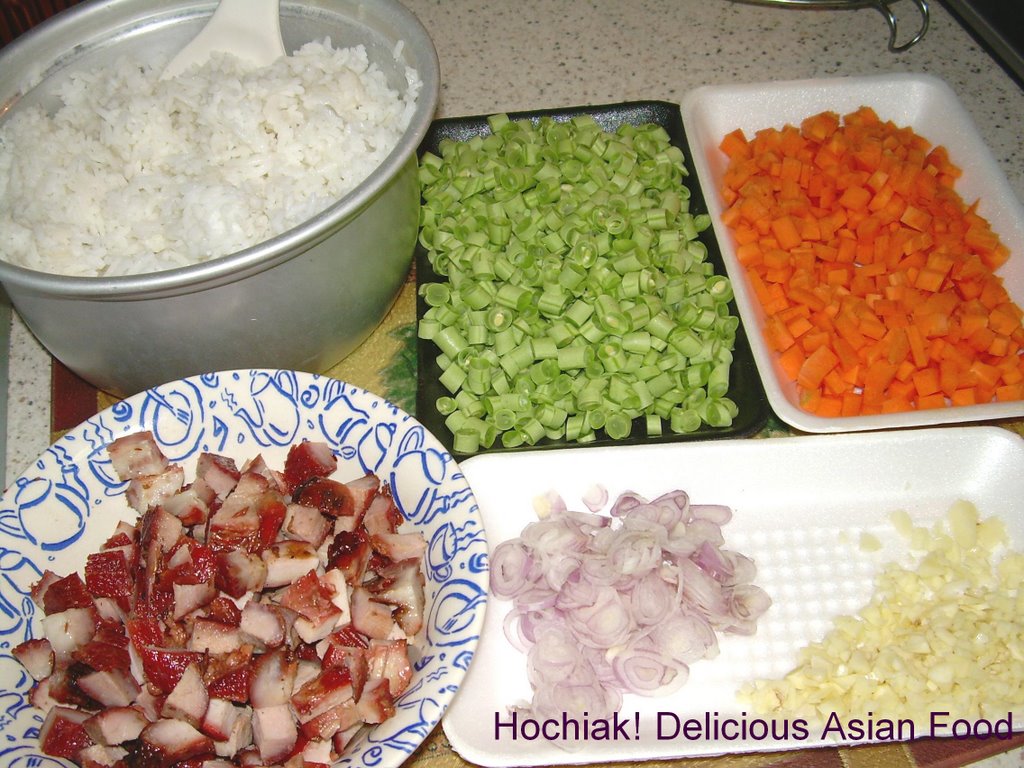
Ingredients

  • 3 bowls of cooked rice (preferably overnight cooked rice) [bowl denoting rice bowl]
  • 1/2 bowl of french beans (cut into tiny cubes)
  • 1/2 bowl of carrots (cut into tiny cubes)
  • 3/4 bowl of char siew (cut into tiny cubes)
  • 5 shallots (sliced thinly)
  • 3 bulbs garlic (chopped)
  • 3 eggs
  • 4 tablespoons cooking oil (preferably palm oil)

Seasoning

  • 3 teaspoons of salt
  • White pepper powder to taste
  • 1 tablespoon oyster sauce
  • 2 teaspoon light soya sauce
  • 1 pinch of msg (optional)

Method

Heat oil in wok and fry shallots till golden brown. Remove fried shallots and set aside.

With remaining oil in wok and at high heat, add garlic, french beans and carrots and stir fry for 1 minute. Add salt and pepper.

Make a “well” in the wok by pushing the french beans and carrots aside. Break eggs into the “well” and fry it till cooked. Mix with french beans and carrots followed by char siew. Fry and mix well for another 1 minute.

Add rice and stir fry the rice for 2 to 3 minutes whilst adding oyster sauce and light soya sauce. If wish to, add a pinch of msg. (The amount of salt, oyster sauce and light soya sauce can be adjusted to your prefered taste)

Serve hot and sprinkle fried shallots over the fried rice before serving.

Bee Pang (Rice Crispies)

Confectionery, Food review September 22nd, 2006

After having a nice bowl of Sarawak Laksa at Nam Chuan Coffeeshop today, something familiar caught my eye being sold at the same stall. It’s Bee Pang (literally translated as “Rice Fragrant” in Hokkien but I would call it Rice Crispies). I have not seen it sold anywhere else here in Kuala Lumpur (yet), so I bought two packets.

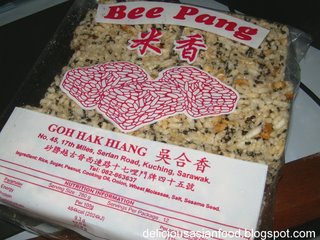
Bee Pang is actually sold in many places but not the type which is made in Kuching, Sarawak. This Bee Pang which I bought is made in Kuching by Goh Hak Hiang of 17th Mile, Serian Road. Something about the Bee Pang made in Kuching makes it taste better than those made elsewhere in Malaysia which I have tasted before.

Bee Pang

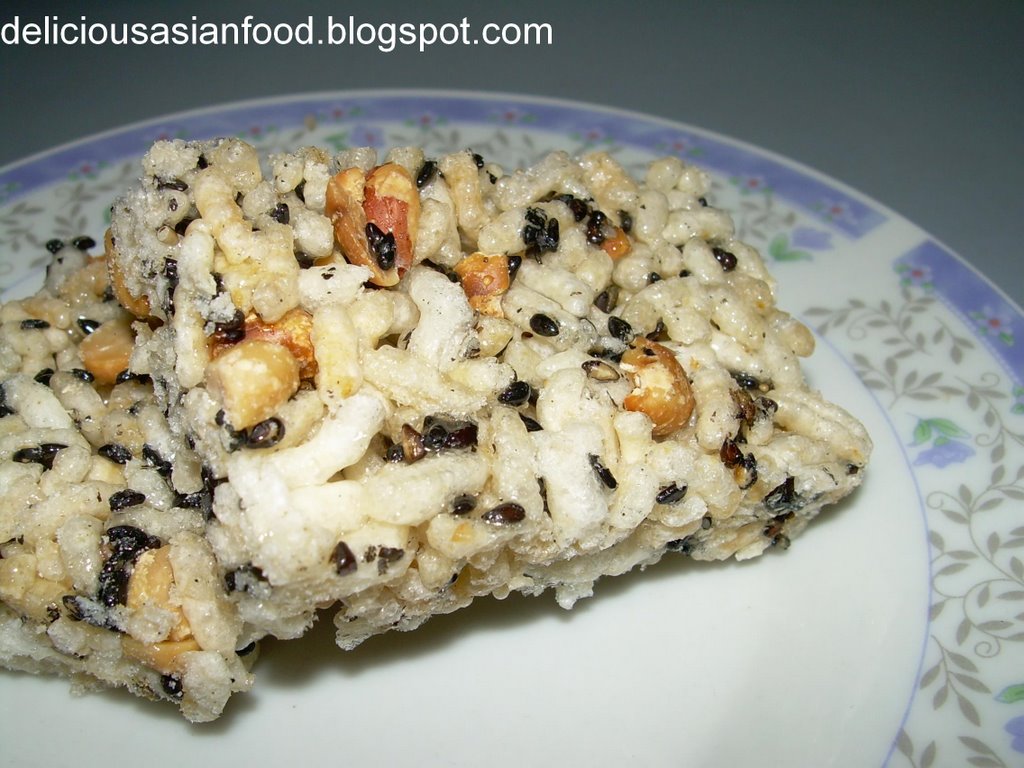
The Kuching variant as shown here is really crispy and light. The ingredients are rice, sugar, peanut, cooking oil, onion, wheat molasses, salt and sesame seed. Eack packet contains three blocks of Bee Pang. These blocks of Bee Pang has been pre-cut into smaller pieces measuring 5cm x 3.5cm x 1cm for easy eating.

It tastes sweet. The onions (which I suspect is shallots) and peanuts give the Bee Pang a nice hint of fragrance and the Bee Pang which I bought here is pretty fresh. It doesn’t have that stale smell or taste associated with those rice crispies which have been left on the shelves for a period of time. It is also light and you can have a couple of pieces without feeling full.

Bee Pang is sometimes used as a hand gift when visiting others. It is also popularly used as part of the “hantaran” or “dowry” during engagements or marriages amongst some of the Chinese community. Try it when you visit Sarawak or if you are in Kuala Lumpur, you can get it from the Sarawak Laksa stall at Nam Chuan Coffeeshop.

Ko Ah from Kedai Biskut Chai Huat Heng

Confectionery, Food review September 21st, 2006

This is not a recipe post (for the first time in this site).

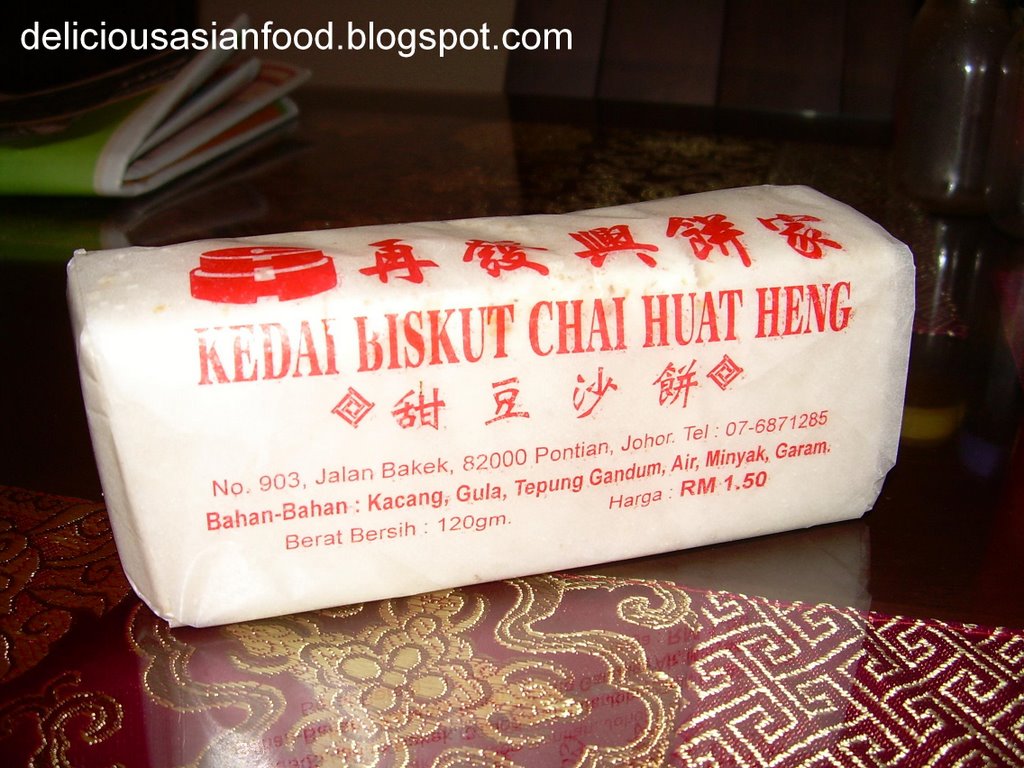
I just want to share with you (pictures only though) what I always buy when I go back to my hometown in Pontian Kechil, Johor, Malaysia.

I’ve been eating this confectionary…or biscuit (if it is classified as biscuit) from the most famous confectionary shop in Pontian Kechil - Kedai Biskut Chai Huat Heng, ever since I was a kid. Not everyday, of course but at least once a year if I can get my hands on them.

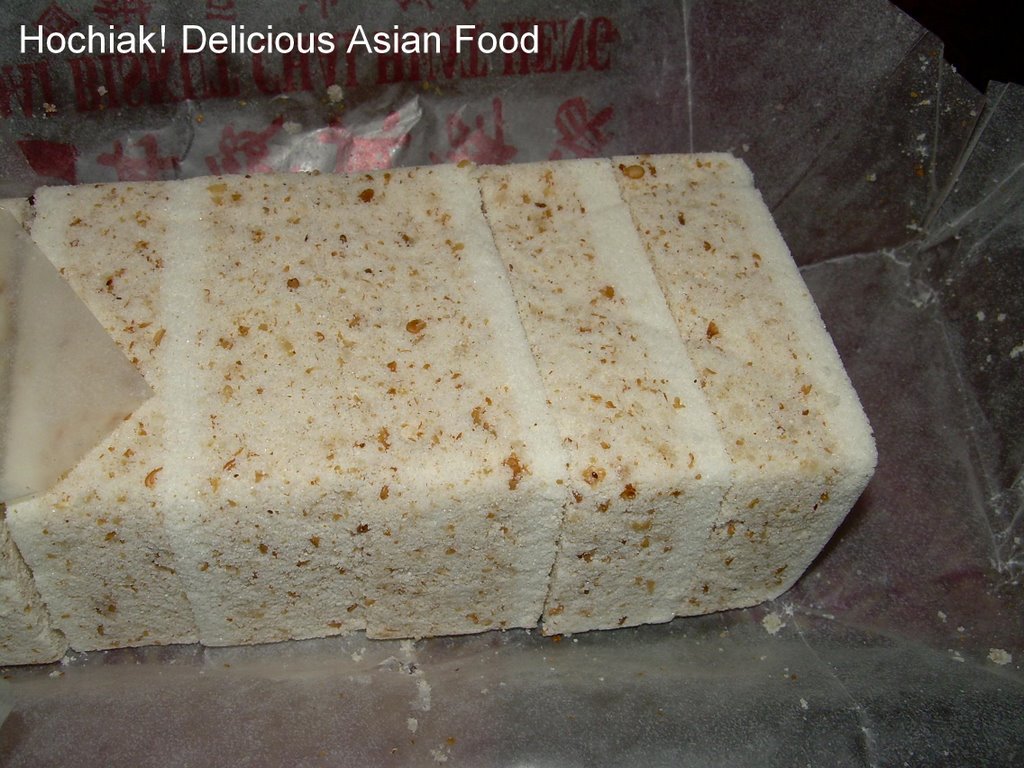
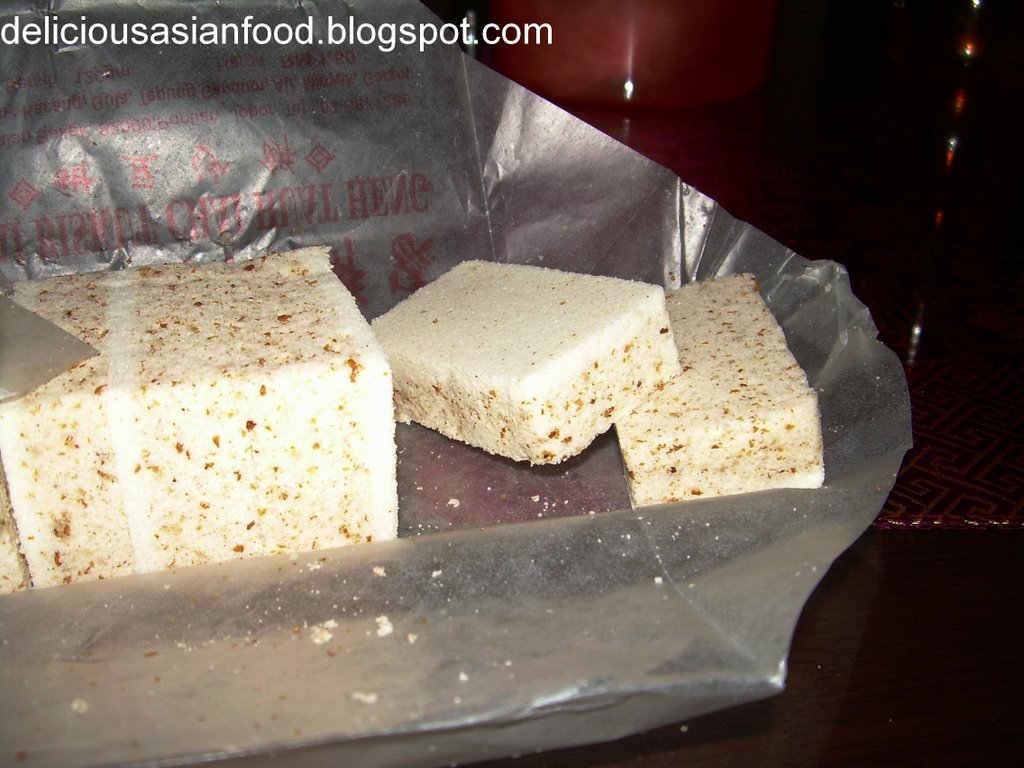
We call this biscuit…or confectionary…let’s just call it biscuit for ease of blogging, Ko Ah. Don’t ask me what it is called in English ‘cos I don’t know. I only know it is the very delicious Ko Ah. It is sold in packets like what you see in the first picture above and has 6 pieces on every pack.

The ingredients that go into it are beans (I wonder what type of beans), sugar, flour, water, oil and salt. I always thought it also contains sesame seeds as there are tiny brown specks in the biscuit but it is not stated so in the list of ingredients.

How does it taste like?

Well, I will describe it as sweet with a hint of saltiness. The texture is slightly crumbly. Definately Delicious Asian Food!

blank