Browsing Category: "Chinese"
Lotus Root Soup with Red Dates and Peanuts
Chinese, Dinner, Pork, Soup, Vegetable October 11th, 2006
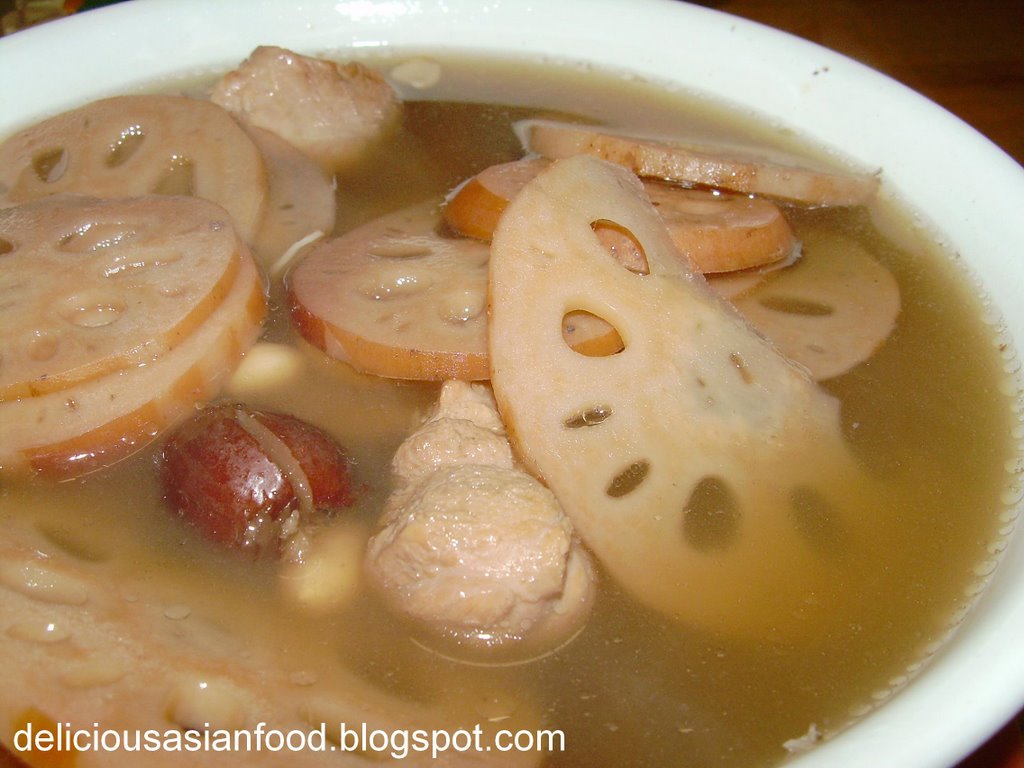 Lotus Root Soup with Red Dates & Peanuts
It’s amazing what people can find to make delicious food. Who would have thought that the root or rhizomes of the lotus plant which is submerged in muddy-like waters in ponds or lakes can be very delicious indeed? Some have used it in stir-fries with sweet peas and baby corns. Some cook soup with it.
One popular chinese-style soup is the Lotus Root Soup with Red Dates and Peanuts. You can even add dried cuttlefish for added flavour. After hours of simmering, it tastes robust and is apparently good for your body. It tastes even better if it is cooked using charcoal fire.
This is my recipe for Lotus Root Soup with Red Dates and Peanuts.
Ingredients
- 300 grammes of lotus root (wash thoroughly, gently scrape the skin and slice not more than 5 mm thick. Discard the points between the sections)
- 300 grammes of pork ribs (ask butcher for ribs suitable for stewing soup)
- 10 - 15 Red Dates
- 100 grammes peanuts (uncooked)
- 4 pieces dried cuttlefish (optional. Cut into halves)
- 2 1/2 soup bowls of water
Seasoning
- Salt to taste
Method
Boil water in pot. Upon boiling, add pork ribs. Remove layer of scum on surface of boiling water.
After about 2 minutes of rapid boiling and having removed scum, add the rest of the ingredients and bring to boil again for 2 minutes.
Cover lid, reduce heat to low and simmer for 3 hours. Add salt to taste before serving.


Mixed Vegetables - Cabbage, Carrots, Wood-Ear Fungus, Dried Lily Buds and Mushrooms
Chinese, Dinner, Lunch, Vegetable October 10th, 2006
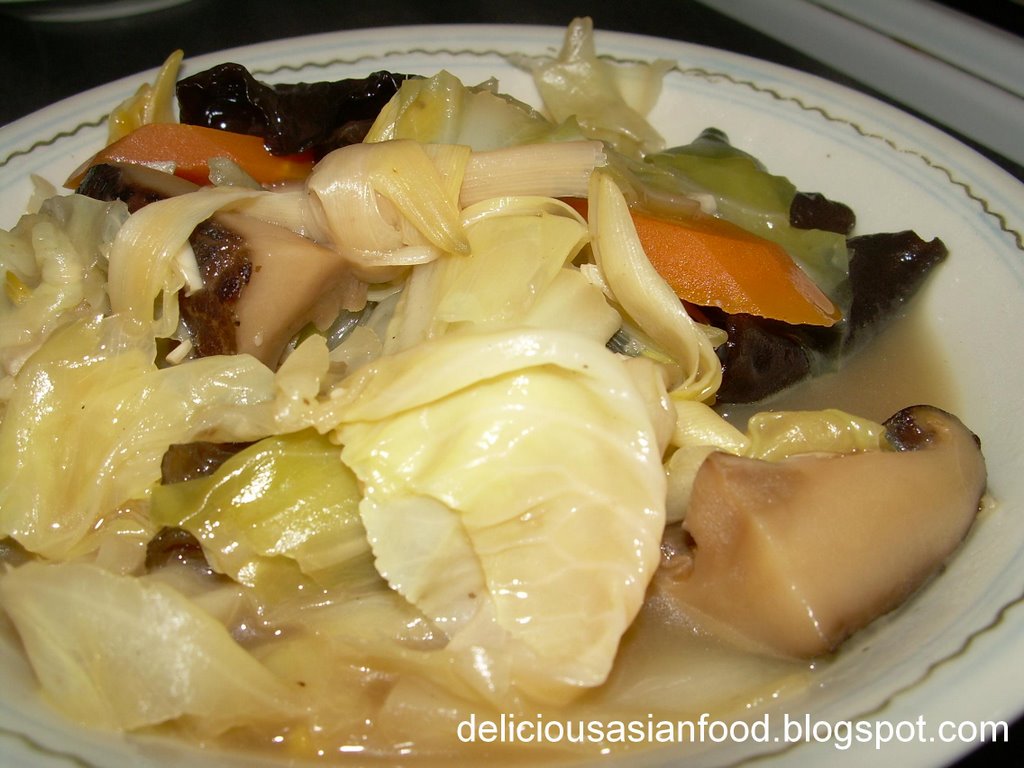 Mixed Vegetables
I have not been posting since the 2nd October. Not that I have not eaten but I have not been cooking and I have not eaten anything which I deem interesting enough to share it here. Recently though, my mum cooked Mixed Vegetables consisting of cabbage, carrots, wood-ear fungus, mushrooms and dried lily buds (kim cham).
Dried lily buds are unopened flower buds of lilies and also known as “golden needles”. The buds need to be soaked in water for at least 30 minutes followed by tying itself in a knot at the middle. The wood-ear fungus also need to be soaked in water till soft prior to cooking as they come in dried form.
This is the recipe for Mixed Vegetables using Cabbage, Carrots, Wood-Ear Fungus, Chinese Mushrooms and Dried Lily Buds.
Ingredients
- 300 grammes of cabbage (cut across into 1 inch width)
- 200 grammes of carrot (sliced)
- 50 to 100 grammes of wood-ear fungus (soaked in water till soft)
- 5 dried chinese mushrooms (pre-soaked in 1 large bowl of water, cut into halves and with stem removed. Keep the water for cooking)
- 50 grammes of dried lily buds (pre-soaked till soft and knotted in the middle)
- 4 bulbs of garlic (chopped)
- 2 tablespoons of cooking oil (preferably palm oil)
- 1 tablespoon of corn flour (mix with 3 tablespoons of water to make starch)
Seasoning
- 2 teaspoons light soya sauce
- 1 tablespoon oyster sauce
- Salt and white pepper powder to taste
- 1 tablespoon chinese cooking wine
Method
Heat oil in wok at high heat. Add garlic, chinese mushrooms and wood-ear fungus. Stir fry for 1 minute ensuring the garlic does not burn.
Add carrots, dried lily buds and cabbage and continue stir frying for another 2 minutes. Add a little water (from the water used to soak mushrooms) at a time to ensure that the vegetables do not dry out.
Add light soya sauce, oyster sauce, salt and white pepper followed by 1 cup of water and let it boil with lid closed. Cook for about 3 minutes or until cabbage is slightly limp.
Finally, add chinese cooking wine and adjust seasoning to taste. This is followed by the corn starch to thicken sauce to your desired thickness.
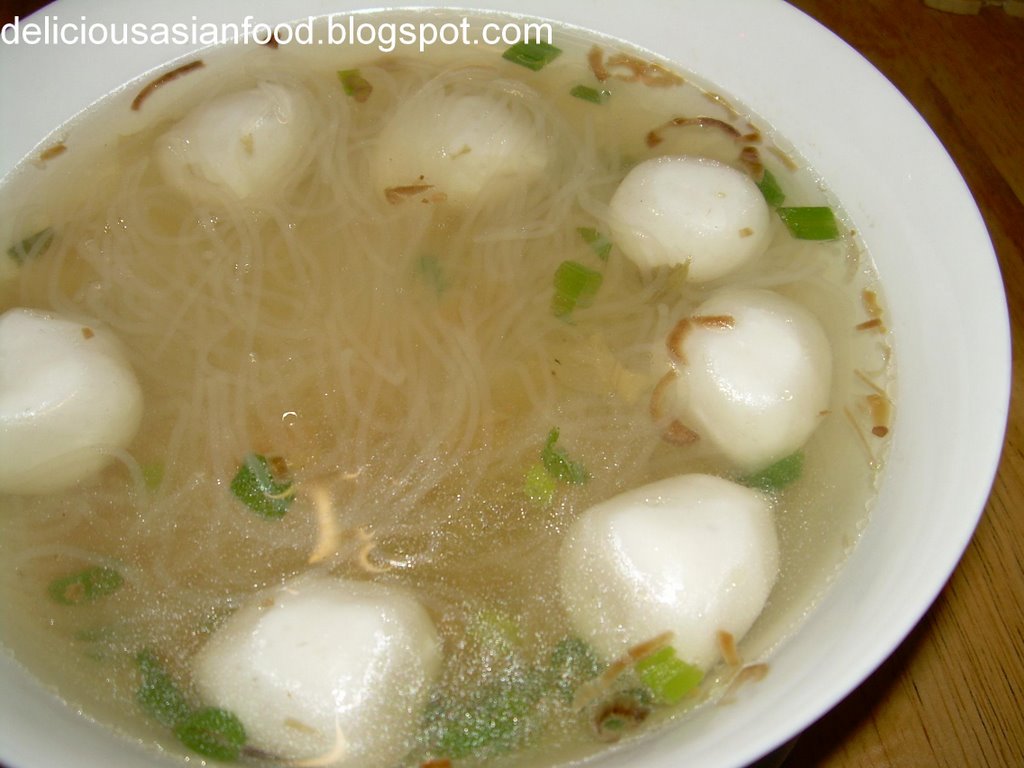
Fish Ball Tang Hoon
Fishballs are commonly sold in wet markets in Malaysia especially by the chinese traders. It is usually cooked in soup and tastes delicious when fresh. I prefer those which are springy and “crunchy”. Fishballs should ideally be cooked the same day it is purchased as it usually does not taste as fresh overnight.
One of the common ways to cook a quick and delicious soup using fishballs is to cook it with Tang Hoon (also known as Glass Noodles). It can be served as an accompaniment to rice or even eaten / drunk on its own. One of the important ingredients which you should strive to add to the soup is chinese salted vegetable as it adds a nice saltish flavour to the soup. The chinese salted vegetable can be bought from sundry shops.
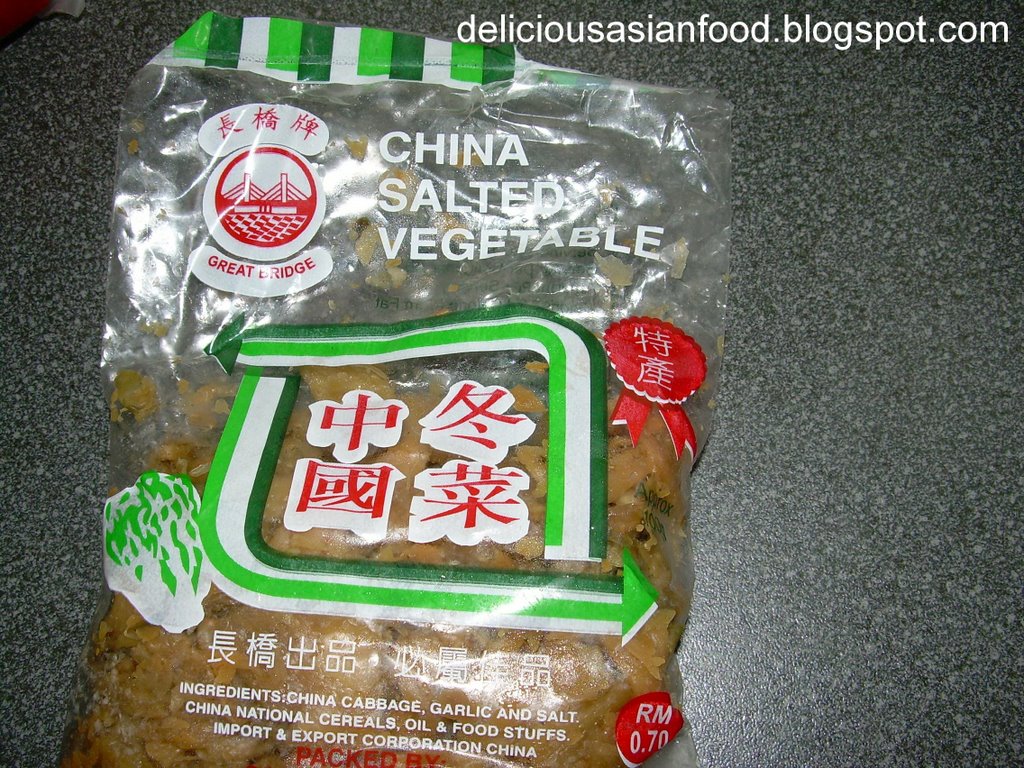 Chinese Salted Vegetable
This is a very simple and clear soup to cook which admittedly, might be too amateurish to some. Happy trying if you have not.
This is my recipe for Fish Ball Tang Hoon Soup a.k.a. Fish Balls with Glass Noodles Soup.
Ingredients
- 10 to 15 fishballs (actually, quantity up to you)
- A handful of Tang Hoon (usually sold tied in a small bunch) [pre-soak in water to soften it]
- Chopped spring onions for garnishing
- A pinch of chinese salted vegetable
- 50 grammes of ikan bilis (dried anchovies) [buy those suitable for making stock]
- 2 bulbs shallots (sliced thinly)
- 2 tablespoons of cooking oil
- 1 1/4 soup bowls of water (approximately 600 ml)
Seasoning
- Light soya sauce
- Salt
- White pepper powder
- A pinch of msg (optional)
Method
Boil water with ikan bilis for 45 minutes to make stock. Remove ikan bilis when done.
Fry shallots in cooking oil till golden brown and place aside to cool.
Once stock is ready (which should be at least 1 soup bowl full) and maintaining high heat, add tang hoon and fish balls. The fish balls will float whilst the tang hoon will turn semi-translucent when cooked. Add seasoning to taste.
Sprinkle chopped spring onions, pinch of chinese salted vegetables and 2 teaspoons of the shallot oil onto the soup before serving.
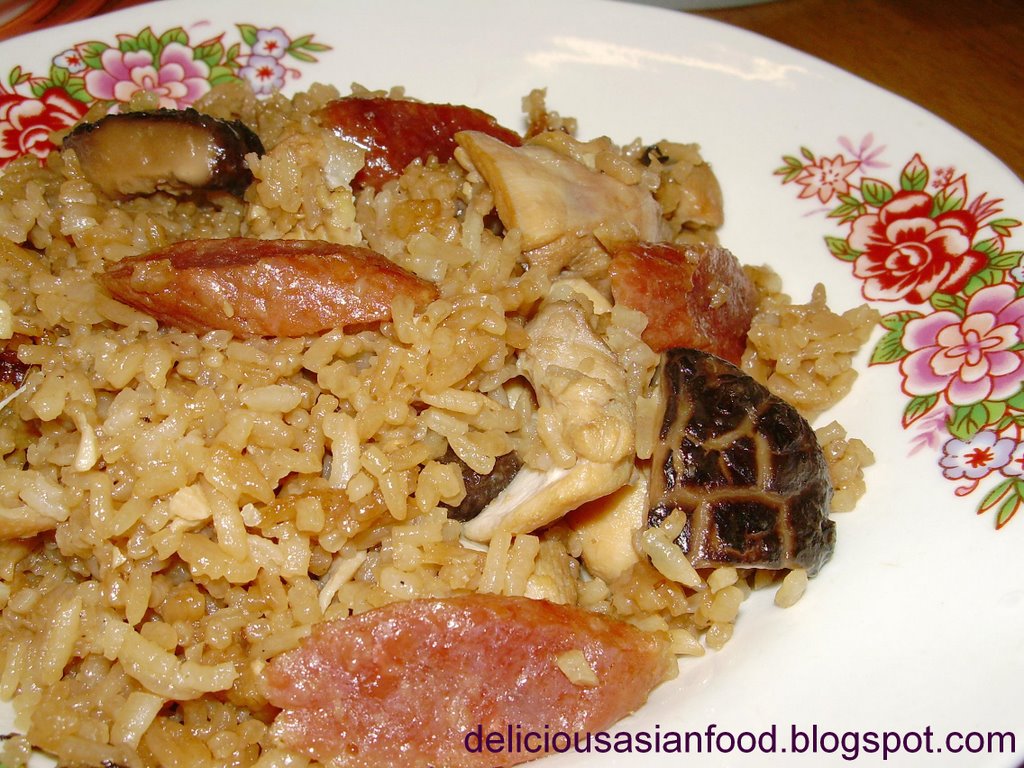 Chicken Rice cooked using Rice Cooker
The rice cooker is a very useful kitchen equipment and is present in many Asian households. Whilst it is primarily designed to cook rice, newer versions of the rice cooker has enable cooks to use it for steaming and even boiling soup.
Recently, my mum cooked Chicken Rice using the rice cooker. It is actually another version of the popular Claypot Chicken Rice. The beauty of using the rice cooker is that the rice does not get burnt at the bottom unlike the claypot. However, for those who are fond of burnt bits of rice, you may have to try this using the claypot instead.
This is the recipe for Chicken Rice using the Rice Cooker.
Ingredients
- 3 cups of rice (measure using the cup that comes supplied together with the rice cooker)
- 2 large chicken drumsticks and chicken thighs (chopped to bit sizes)
- 5 chinese dried mushrooms (pre-soaked in a bowl of water and cut to half or quarters. Do not throw away the water used for soaking)
- 2 chinese lap cheongs (chinese sausages) (sliced)
- 4 bulbs shallots (sliced thinly)
- 5 slices of ginger (more if you like a stronger ginger taste)
- 2 tablespoons of cooking oil
- warm water
Marinade for chicken
- 3 tablespoons oyster sauce
- 2 teaspoon of white pepper powder
- 1 teaspoon of sesame oil
- 1 tablespoon of chinese cooking wine
Seasoning
- 5 teaspoons of light soya sauce
- 1 tablespoon of dark soya sauce
Method
Soak rice in water for about 1 1/2 hours. Marinade chicken for the same length of time.
Heat oil in wok and fry shallots till golden brown. Remove fried shallots.
With remaining oil in wok and at high heat, add pre-soaked chinese dried mushrooms and ginger and stir fry for about 1 minute. Add marinated chicken and stir fry for another minute.
Add pre-soaked rice and seasoning and continue frying for about 2 minutes. Sprinkle a little bit of warm water to keep the rice from drying out.
Remove rice with ingredients into the rice cooker. Place the lap cheongs over the rice. Pour water (previously used to soak dried chinese mushrooms) gently over the rice to cover the rice just like how you would usually cook white rice in a rice cooker. Add plain water if the water used to soak dried chinese mushrooms is insufficient. Turn on your rice cooker and let it cook.
Serve hot and sprinkle fried shallots over the rice prior to serving.
Note : As you learn to cook this dish, adjust the seasoning to your prefered taste. You can also sprinkle chopped spring onions over the Chicken Rice for added colour and taste.