Browsing Category: "Chinese"
Sauteed Chicken Supreme with Dried Chillies
Chicken, Chinese, Dinner, Lunch November 27th, 2006
I can’t believe that this is my 50th post! And I am truly encouraged that some have left kind words of encouragement to me for the recipes here. You can’t imagine how much I beam from ear to ear when I read that some of my recipes have been tried and tested to satisfaction. It’s very much like how a chef will feel when the food that has been cooked is given the thumbs up or finished cleaned on the plate.
Anyway, for the 50th post, I would like to highlight a recipe which my wife shared with me (and cooked for me). She does cook…and she cooks well too. Only thing is that I have persuaded her to allow me to use the kitchen and enjoy my hobby of cooking instead.
This dish is tasty as it is hot and spicy whilst at the same time, has a hint of sourness to it (due to the vinegar / lime used). It is also very fragrant due to the quite liberal use of chinese cooking wine. It is a variant of Kung Po Chicken, I believe but tastes slightly different. Adjust the taste according to your preference. That very day when she cooked this dish, we had some cashew nuts at home and she decided to throw some in hence what you see in the picture. It is not in the recipe but you can add it in for extra bite!
This is my wife’s recipe for Sauteed Chicken Supreme with Dried Chillies
Ingredients
- 500 grammes of chicken supreme (the most tender part of chicken breast which is longish in shape, slice it to cubes / thick diagonal slices)
- 20 dried chillis (pre-soaked for 30 minutes, seeded and cut into halves)
- 5 cloves garlic (chopped)
- 4 tablespoons of cooking oil (preferably palm oil)
Marinade
- 1 tablespoon chinese cooking wine
- 1 tablespoon dark soya sauce
- 2 tablespoon corn flour
Seasoning
- 2 tablespoon chinese cooking wine
- 3 tablespoons of sugar
- 1 teaspoon of sesame oil
- 1 tablespoon white vinegar (or squeeze approximately 10 limes or more for juice)
- 1 teaspoon of cornflour
- 1/2 tablespoon of light soya sauce
- 1 tablespoon of water
Method
Pound meat slightly with blunt side of knife or tenderiser. Marinade for 30 minutes.
Heat oil in wok, fry the dried chilli for 30 seconds and then add the garlic. Continue to stir-fry till garlic begin to brown. Add chicken and fry till cooked (if you wish to add cashew nuts, add them now). Then add seasoning, stir well until evenly distributed and gravy dries up.
Serve hot with steamed white rice.


Steamed Chicken with Carrots, Wood-Ear Fungus, Dried Lilybuds and Mushrooms
Chicken, Chinese, Dinner, Lunch, Vegetable November 23rd, 2006
Remember I used to have a recipe called Mixed Vegetables - Cabbage, Carrots, Wood-Ear Fungus, Dried Lily Buds and Mushrooms? Well, I am going to modify that recipe a bit instead. Using most of the same ingredients, these will be steamed together with chicken to make a nice healthy dish.
In this dish, the chicken is sweet-tasting and has a hint of chinese cooking wine as it was marinated prior to steaming. The meat will usually be tender when cooked as whole chicken leg (drumstick and thigh meat) is used and the wine further tenderises the meat. This is in contrast with the crispness of the wood-ear fungus, sweetness of the carrots and lily buds and smoky taste of the mushrooms. Truly, it comes with a riot of taste and goes well with steamed white rice.
Actually, as emphasised in most of my recipes, you don’t actually have to follow the ingredients in full especially if you have difficulty finding them at the place you live. Just use a bit of creativity and substitute them with different ingredients. If you are not sure, feel free to ask me at the comment section below.
This is my recipe for Steamed Chicken with Carrots, Wood-Ear Fungus, Dried Lilybuds and Mushrooms.
Ingredients
- 2 whole chicken legs (chopped into bite pieces)
- 1 small sized carrot (sliced)
- 50 to 100 grammes of wood-ear fungus (pre-soaked till soft)
- 5 dried chinese mushrooms (pre-soaked till soft) or enoki, oyster or button mushrooms
- 50 grammes of dried lily buds (pre-soaked till soft and knotted in the middle)
- 1 whole bulb of garlic (chopped)
- 1 tablespoon of cooking oil (preferably palm oil)
Marinade for chicken
- 1 tablespoon of oyster sauce
- 2 teaspoons of light soya sauce
- A couple of dashes of white pepper powder
- 1 tablespoon of chinese cooking wine
- 1 tablespoon of corn flour
Seasoning
- 1 tablespoon of oyster sauce
- Salt to taste
Method
Marinade the chicken for about an hour.
Heat oil in wok, followed by garlic and chinese mushrooms. Fry till garlic begins to brown. Add carrots, wood-ear fungus and lily buds. Stir-fry for 2 minutes. Remove and set aside.
Place chicken on a suitable plate for steaming (I use a stainless steel plate as seen in the picture above). Place the pre-stirfried vegetables on top of the chicken. Steam in wok / steamer for at least 20 minutes or until chicken is thoroughly cooked.
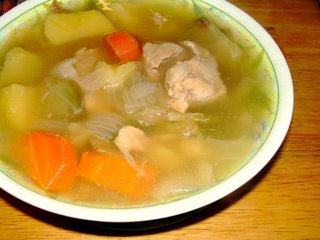 A B C D Soup
There is a famous soup called ABC Soup which is essentially a combination of cubed potatoes, carrots, tomatoes and onions cooked in meat stock (usually pork or chicken). After my posting on Hot and Sour Szechuan Vegetable Soup recently, Tummythoz, girlgirl and tekko informed me that they add carrots and even corn into the soup. That was new to me.
So, when I went home to my mum’s place last night, I was most surprised to see a bowl of Szechuan Vegetable Soup which has carrots, onions and potatoes in it! It is indeed a marriage of the Hot and Spicy Szechuan Vegetable Soup with the famed ABC Soup! And true enough, it has the hot and sourness of the szechuan vegetables and the sweetness of the ABC soup. I shall call it the A B C D Soup then!
It is another one of those simple-to-cook yet appetising and nutritious soup which is great on a cold weathered day!
This is the recipe for A B C D Soup.
Ingredients
- 200 to 300 grammes of meat (pork ribs or suitable cuts or chicken parts)
- 2 medium sized potatoes (washed, skin removed and cubed in big chunks)
- 1 carrot (cut in big pieces)
- 2 large tomatoes (quartered)
- 2 large onions (quartered)
- 1 piece szechuan vegetable (washed and sliced)
- 2 bowls of water (approximately 800 ml to 1 litre)
Method
Bring water to boil. Add meat and let water reboil. Remove layer of scum from surface of water.
Add the rest of the ingredients, bring to boil again for 5 minutes and then lower heat to simmer for at least 1 hour or longer.
You don’t really need to add any seasoning to this soup as the various ingredients will impart its taste.
Essential Seasoning or Ingredients for Chinese Cooking
Chinese, Miscellaneous November 20th, 2006
Whilst I did cook over the weekend, unfortunately, I did not have my digital camera around and was not able to take pictures of what I cooked. Hence, I probably would not have any recipe to share this week.
Nevertheless, I would like to share with you the essential seasoning or ingredients in chinese cooking (or at least, this are the must-haves in my kitchen). When I first moved out of my parent’s house to study in England, these were some of the items that I stock up in the kitchen. Similarly, when my wife and I got married, these are some of the necessities in our kitchen. The list is by no means exhaustive but essential, nevertheless.
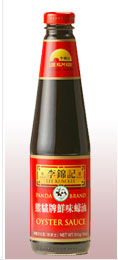
Oyster Sauce is a versatile sauce which appears in many chinese recipes. The current brand I am using is Lee Kum Kee’s Panda brand Oyster Sauce. You can use it in cooking vegetables and meat recipes. Some even use it as a dip. In some recipes, oyster sauce is probably the only ingredient you need. Whilst it is called oyster sauce, it does not really smell like a bottle of oysters. I would describe the taste as salty sweet.
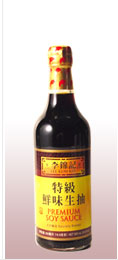
Next on the list is Light Soya Sauce. Made from fermented soya bean, light soya sauce is a good substitute for salt as it is salty with a hint of sweetness (depending on the quantity of sugar and salt used in the fermentation process). There are many brands available and recently, I had the chance to try out Lee Kum Kee’s Premium Soy Sauce above and was quite impressed. It is not overly salty and rather light. This is forgiving because if you are using light soya sauce which is very salty in taste, you might spoil your dish with saltiness if you add a tad too much during cooking.
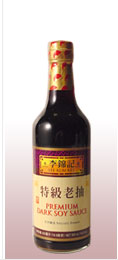
If you have light soya sauce, you must not forsake the Dark Soya Sauce. Dark soya sauce is of course, darker in colour than its light counterpart but that’s not all. Generally, the taste is sweeter than salty though just like light soya sauce, the level of sweetness depends on the manufacturer. I currently use the Kadory brand which is a local brand. It is runny just like the light soya sauce unlike some brands which are thick and slightly sticky. Dark soya sauce is sometimes added to colour the dish and sometimes used as a dip. The picture above is for illustration purposes.
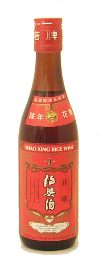
Next stop, the Shao Hsing rice wine. A must-have in chinese kitchens, it is used in quite a lot of recipes. Besides being a seasoning ingredient (it adds aroma and sweetness to the dish), it is also used as a marinade. There are many brands available in the market and most of them are called Shao Hsing or Tsao Tsing rice wine. Most likely due to its origin in China.
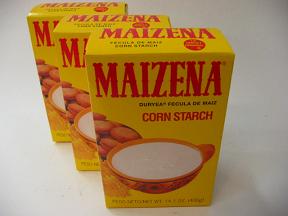
Apart from the above, I also have corn flour or corn starch in my kitchen. It is used in marinades (to seal the meat, I think) as well as to mixed with water to form starch to thicken gravies. When used as corn starch, it can give some dishes eg. vegetables a smooth feel when eaten.
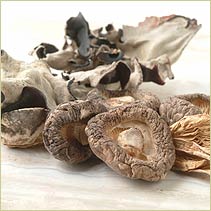
If you have checked out some of my recipes, one of my most used items is dried chinese mushrooms. I understand that these are shiitaki mushrooms. It has a smoky flavour and depending on one’s taste buds, can be either heavenly or repulsive. Those grown in Japan are the most expensive and I find them fragrant. The good quality ones have nice “flower” patterns on the top of the mushroom. These dried mushrooms are always pre-soaked with water to soften it. If you know you are going to cook them, it is best to pre-soak them overnight to enable the mushrooms to be fully hydrated. That way, they will be able to absorb whatever gravy you are cooking as well as imparting it’s own taste to the dish you are cooking.
Apart from the above, other essentials are too obvious to mention eg. salt, sugar, cooking oil and such. I do have monosodium glutamate as well (Ajinomoto) but I rarely use it. It is a taste enhancer and if I do actually use it, I only take a pinch.
By the way, I don’t get paid by any of the companies above by writing this post